LSF versus Concrete: A Detailed Comparison of Costs and Finished Price (2025 Guide)

In this article
Choosing the structural system is one of the most important decisions in any building project. For years, concrete and conventional steel frames were the default options, but over the last two decades light steel framing (LSF) has changed the industry. One of the first questions clients, contractors and investors ask is about the cost of an LSF structure compared with concrete. This article goes beyond a simple comparison of numbers: it looks at costs across the whole period of construction and use, to give a clear picture of how the two methods compare economically.
The two systems in brief
Concrete structures
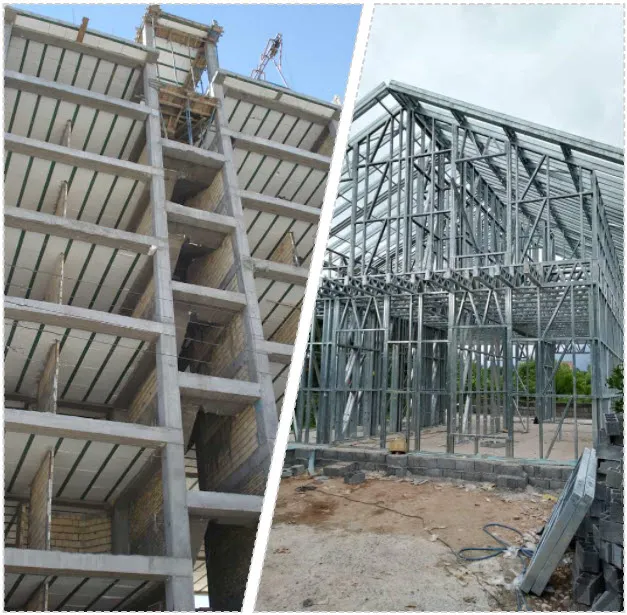
The traditional, widespread system in Iran, with a concrete frame of foundations, columns and beams. These structures are heavy, and they take a long time for formwork, reinforcement and for the concrete to cure to full strength.
LSF structures (light steel framing)
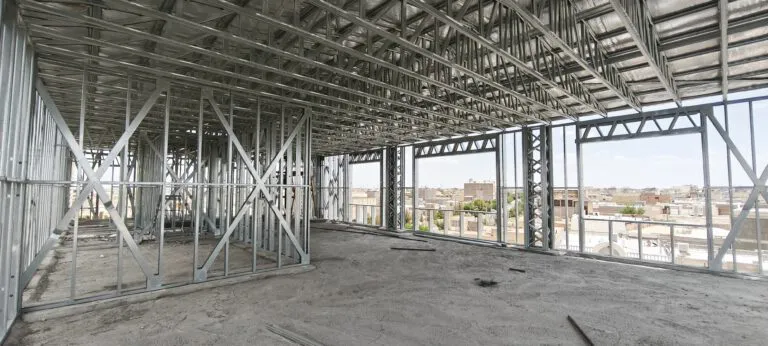
A dry, prefabricated building system in which thin cold-formed, galvanized steel sections (usually 0.5 to 3 mm thick) form the main frame, the walls and the roof. The parts are made in a factory and bolted or screwed together on site.
The factors behind the cost of LSF and concrete
1. Raw materials
At first glance, the galvanized steel used in LSF can look more expensive than the cement, aggregate and rebar used in concrete. But the comparison has to be made on the finished weight of the structure and its floor area:
- Concrete: because the building is so heavy (a concrete building weighs several times as much as an LSF one), it consumes a large volume of materials.
- LSF: a light-steel structure weighs about a quarter to a fifth of a concrete one. So although galvanized steel costs more per kilogram, far fewer tonnes are needed, and material costs for LSF are competitive and sometimes lower than for concrete.
2. Labour and construction
- Concrete: needs many workers across several trades (formwork, steel fixing, batching and more). Human error is common, and the final quality depends heavily on the skill of the workers on site.
- LSF: because the parts are prefabricated, installation is much faster. Building three to four times faster than with concrete cuts site costs, labour and fixed site overheads sharply. LSF is installed by a small, skilled team that finishes the job in a short time.
3. Side and hidden costs (foundations)
One of the most important factors in the cost of an LSF structure is the effect of its low weight on the foundations.
- Concrete: the heavy building forces engineers to design large, deep, material-hungry foundations, which means more concrete and more rebar.
- LSF: the light structure (about 40 to 60 kg per square metre) greatly reduces the dead load on the building. The foundations get smaller, and the cost of excavation, reinforcement and pouring them falls by 30 to 50%.
4. Indirect costs (time and inflation)
In Iran's unstable, inflationary economy, time really is money.
- The sooner a project is finished, the sooner its working capital is released, and the less the client is exposed to rising material prices.
- LSF gets a building into use in the shortest possible time, while a concrete building takes months longer because of curing and slower work. That time saved is a clear financial advantage for LSF.
5. Services and finishing
- With LSF's prefabricated panels, electrical and mechanical services can be run inside the walls and suspended ceilings quickly and precisely. And because the frame is perfectly level and plumb, plastering and finishing costs drop sharply, with no need for heavy plaster. Compared with concrete walls that need a lot of plaster and levelling, this is a significant saving.
Quick cost comparison (estimate for 2025)
| Cost item | Concrete (heavy) | LSF (light) |
|---|---|---|
| Main materials | Medium (high volume) | Medium (high quality, low weight) |
| Labour | High | Low |
| Construction time | Long | Short |
| Foundations | Very high | Low |
| Building services | Medium | Low |
| Finishing | High | Low |
| Total (estimate) | Baseline (100%) | 85% to 90% |
Reading the table: on some small projects the initial material cost for LSF may look a little higher, but taking the total cost of construction into account, an LSF structure usually works out 10 to 15% cheaper than a concrete one.
Profitability and return on investment
Investors should remember that a project's profit is not just the price of materials: it also depends on how quickly the money comes back. If a concrete building takes 24 months to finish, the same building in LSF can be finished in 12. That means:
- selling or letting the units a year earlier;
- less interest on construction loans;
- less inflation on materials not yet bought.
So from a project-management and construction-economics point of view, an LSF structure is not only more economical, it also makes the project considerably more profitable.
Drawbacks and limits (for an informed decision)
To keep this balanced, here are the limits to weigh:
- Height: LSF is most economical for low- and mid-rise buildings (usually up to five storeys). For tall towers, a concrete or heavy steel frame is the better choice.
- Skilled crews: building LSF properly needs trained teams. An inexperienced contractor can cause problems.
- Transport: because of their size, LSF components need suitable transport, though this cost is small next to the project's overall savings.
Conclusion: why LSF comes out ahead on cost
Looking across the technical, construction and economic factors, an LSF structure is more economical than a concrete one, both in the short term and the long term. The saving shows up in the direct costs of building (foundations, labour and materials), and a shorter project and higher finished quality add real value for the owner.
With currency swings and the construction industry's need for faster, modern methods, LSF has a bright future as a smart alternative to conventional concrete. If you want a lighter building, faster construction and a better finished project cost, talking to LSF specialists is a good first step towards a successful investment.
Related services
From reading to building.

More articles